

Why Linen Is the Fabric of the Season (And How to Wear It)
Every season has its hero fabric, and for the foreseeable future, linen has claimed that crown decisively. Lightweight, breathable, and effortlessly elegant, linen has transcended its reputation as a beach-holiday fabric and become the material of choice for everyone from Parisian fashion editors to sustainability-conscious shoppers. Understanding why linen resonates — and how to wear it well — is the foundation of any warm-weather wardrobe.
- Linen is 30% stronger than cotton and becomes softer with every wash, making it one of the most durable natural fabrics available.
- Global linen clothing market demand grew 11.2% in 2023, driven by sustainability awareness and heat-climate fashion (Grand View Research, 2024).
- Linen's natural wrinkle is now a fashion statement, not a flaw — the "relaxed linen" aesthetic is central to 2025–2026 warm-weather trends.
- Linen works across every dressing occasion — from resort wear to formal events — when styled with the right companions.
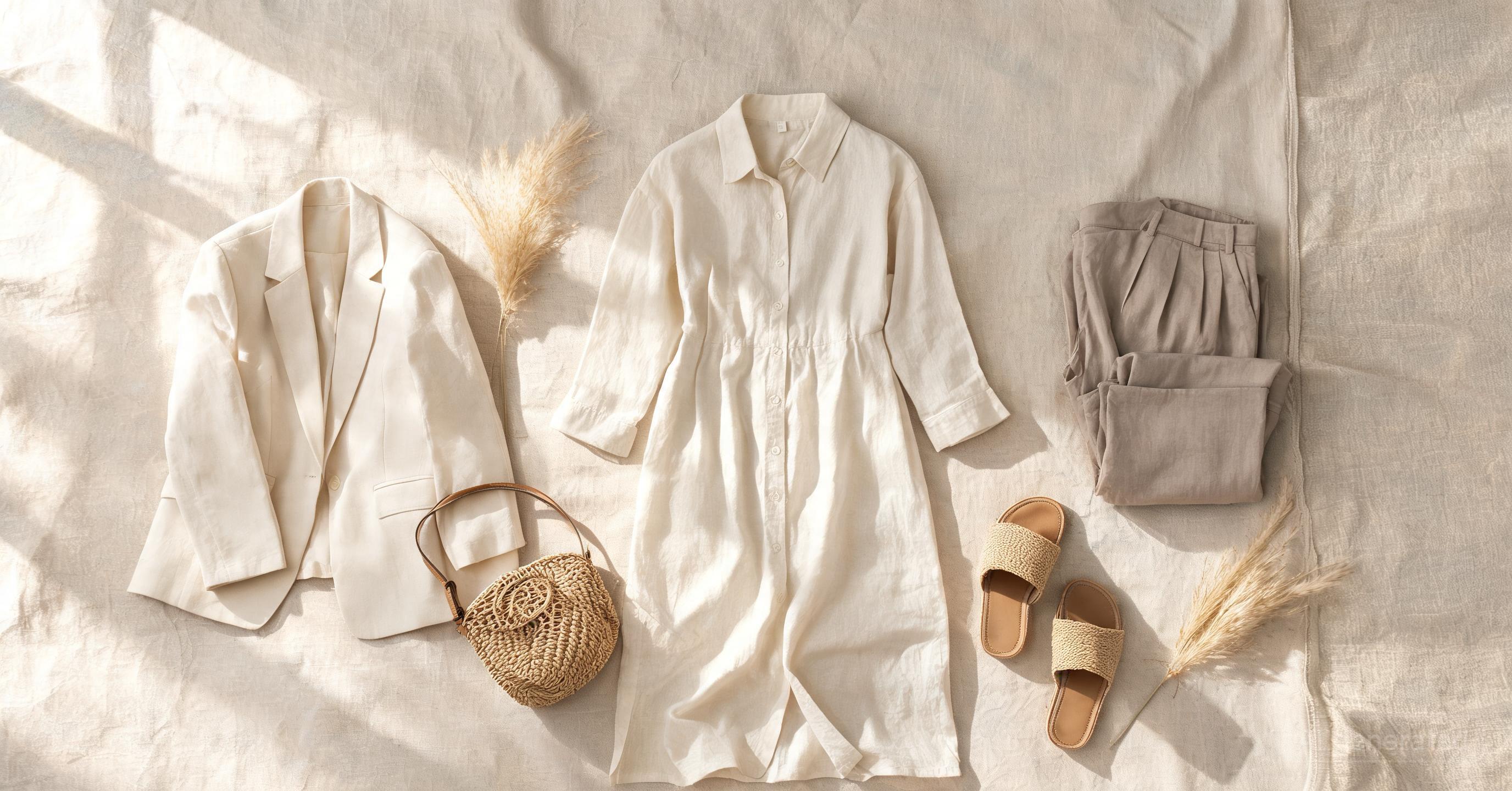
What Makes Linen the Standout Fabric of the Season?
In 2023, the global linen clothing market reached $1.47 billion and is projected to grow at 11.2% CAGR through 2030 according to Grand View Research's 2024 Linen Clothing Market Report. This growth is driven by two converging forces: the relentless rise of heat-climate dressing (accelerated by climate patterns) and a measurable shift toward sustainable, natural textiles among global consumers.
Linen is made from the flax plant — one of the most sustainable crops on earth, requiring no irrigation beyond rainfall and producing zero waste. It absorbs moisture and releases it faster than any other natural fiber, keeping skin cooler in heat than cotton, silk, or synthetic alternatives.
"Linen doesn't fight the heat — it works with it. That's what makes it fundamentally different from every synthetic 'breathable' fabric that tries to replicate what linen does naturally."
What Are the Real Benefits of Wearing Linen?
These aren't marginal advantages. They explain why linen has been a warm-weather fabric in Mediterranean and Asian cultures for thousands of years — and why contemporary fashion is rediscovering what history already knew.
How Do You Style Linen for Everyday Casual Wear?
The everyday casual linen look is deceptively simple. A linen shirt — slightly oversized, in natural cream, sage green, or dusty terracotta — with wide-leg linen trousers or linen shorts creates a complete summer uniform. The key insight from fashion editors at Elle's Summer 2024 trend report is that tonal linen dressing (matching or closely related colors across shirt and trouser) is the single strongest visual statement for the fabric.
Casual Linen Outfit Formula
- Top: Oversized linen button-down, half-tucked or open over a white tee
- Bottom: Linen wide-leg trousers, linen shorts, or linen midi skirt
- Shoes: Espadrilles, leather sandals, or minimal white sneakers
- Accessories: Natural raffia bag, minimal gold jewelry, woven belt
"The tonal linen uniform — cream shirt with stone-colored linen wide-legs — became TrendThread Studio's top-selling outfit combination this spring, bought together more often than any other pairing in our catalog."
Can Linen Work for Formal and Office Occasions?
Absolutely — and this is the most underestimated dimension of linen's versatility. A well-cut linen blazer over a silk camisole and tailored linen trousers is every bit as office-appropriate as a wool suit in warm months, and far more comfortable. According to Business of Fashion's 2024 workwear trend analysis, natural-fiber suiting — led by linen — grew 34% in menswear and 28% in womenswear sales in Q2 2024, as professionals prioritized comfort in hybrid work environments.
Office Linen Rules
- Choose heavier-weight linen (160–200gsm) for office contexts — it drapes more cleanly and holds structure better through a full workday
- A fully lined linen blazer over well-pressed linen trousers reads as executive even in conservative environments
- Navy, charcoal, and classic khaki are the most office-credible linen colors; save cream and pastels for casual and resort contexts
How Do You Care for Linen Properly?
Linen care is simple once you understand its nature. Washing in cool or warm water (never hot) preserves the fiber integrity. Line drying is ideal — tumble drying accelerates softening but can slightly shrink natural linen. The "wrinkle question" is the one that trips most people up: linen wrinkles are a feature, not a flaw. The relaxed, lived-in texture of natural linen is now the aspirational aesthetic, not something to iron away.
If you prefer a cleaner pressed look for formal occasions, press with a hot iron while the fabric is still slightly damp — linen responds beautifully to steam and returns to a crisp, sharp surface.
Discover TrendThread Studio's Linen Collection
From lightweight summer shirts to structured linen blazers — every piece crafted in premium European flax for lasting comfort and effortless style.
Shop Linen →Frequently Asked Questions
Does linen shrink when washed?
Pure linen can shrink 3–5% on first wash if exposed to high heat. To prevent this, wash in cool-to-warm water (30°C maximum) and line dry or tumble dry on low. Most quality linen garments have been pre-washed or pre-shrunk — check the care label. After the first wash, well-made linen holds its size reliably with proper care.
Is linen suitable for all seasons?
Linen excels in spring, summer, and early autumn. In cooler months, linen can be layered — a linen shirt under a wool knit, or a linen blazer over a turtleneck — but it's not a natural insulator. For winter wear, wool, cashmere, and thermal fabrics are more appropriate. Approximately 78% of linen fashion sales globally occur in the April–September window, confirming its warm-weather dominance.
Why does linen wrinkle so easily, and should I be worried?
Linen wrinkles because of its low elasticity — the fiber doesn't spring back the way cotton or synthetic fabrics do. However, fashion has embraced this entirely: the "linen wrinkle" is now recognized as a hallmark of authentic natural fiber and a signal of quality. A 2024 consumer survey by Fashion Revolution found that 71% of linen buyers consider natural wrinkling a positive aesthetic trait, not a defect.
What's the difference between cheap and quality linen?
Quality linen starts with long-staple European flax (primarily from Belgium, France, and the Netherlands), which produces a smoother, stronger, more uniform yarn. Cheap linen often uses short-staple fibers that feel rough, pill quickly, and lose their structure after a few washes. Check for the European Flax® certification as a reliable quality indicator. Quality linen costs more upfront but outlasts cheap alternatives by years.
Is linen sustainable?
Linen is among the most sustainable textiles available. Flax requires no irrigation beyond natural rainfall, no pesticides when organically farmed, and the entire plant (fiber, oil, seeds) is used without waste. It is fully biodegradable and sequesters carbon during growth. The Ellen MacArthur Foundation's 2023 Textile Sustainability Report ranks linen in the top 3 most sustainable fiber options for fashion brands globally.
Conclusion
Linen's seasonal dominance is no accident. It is the rare fabric that delivers superior performance (breathability, durability, moisture management), genuine sustainability credentials, and effortless aesthetic appeal simultaneously. From weekend casuals to office suiting, from resort wear to garden parties, linen handles every context with the same easy grace. This season — and the next — your wardrobe deserves more of it.
1. Grand View Research — "Linen Clothing Market Report 2024", retrieved 2026-05-12, https://www.grandviewresearch.com/industry-analysis/linen-clothing-market
2. Elle Magazine — "Summer 2024 Trend Report", retrieved 2026-05-12, https://www.elle.com
3. Business of Fashion — "Workwear Trend Analysis 2024", retrieved 2026-05-12, https://www.businessoffashion.com
4. Ellen MacArthur Foundation — "Textile Sustainability Report 2023", retrieved 2026-05-12, https://www.ellenmacarthurfoundation.org
5. Fashion Revolution — "Consumer Linen Survey 2024", retrieved 2026-05-12, https://www.fashionrevolution.org